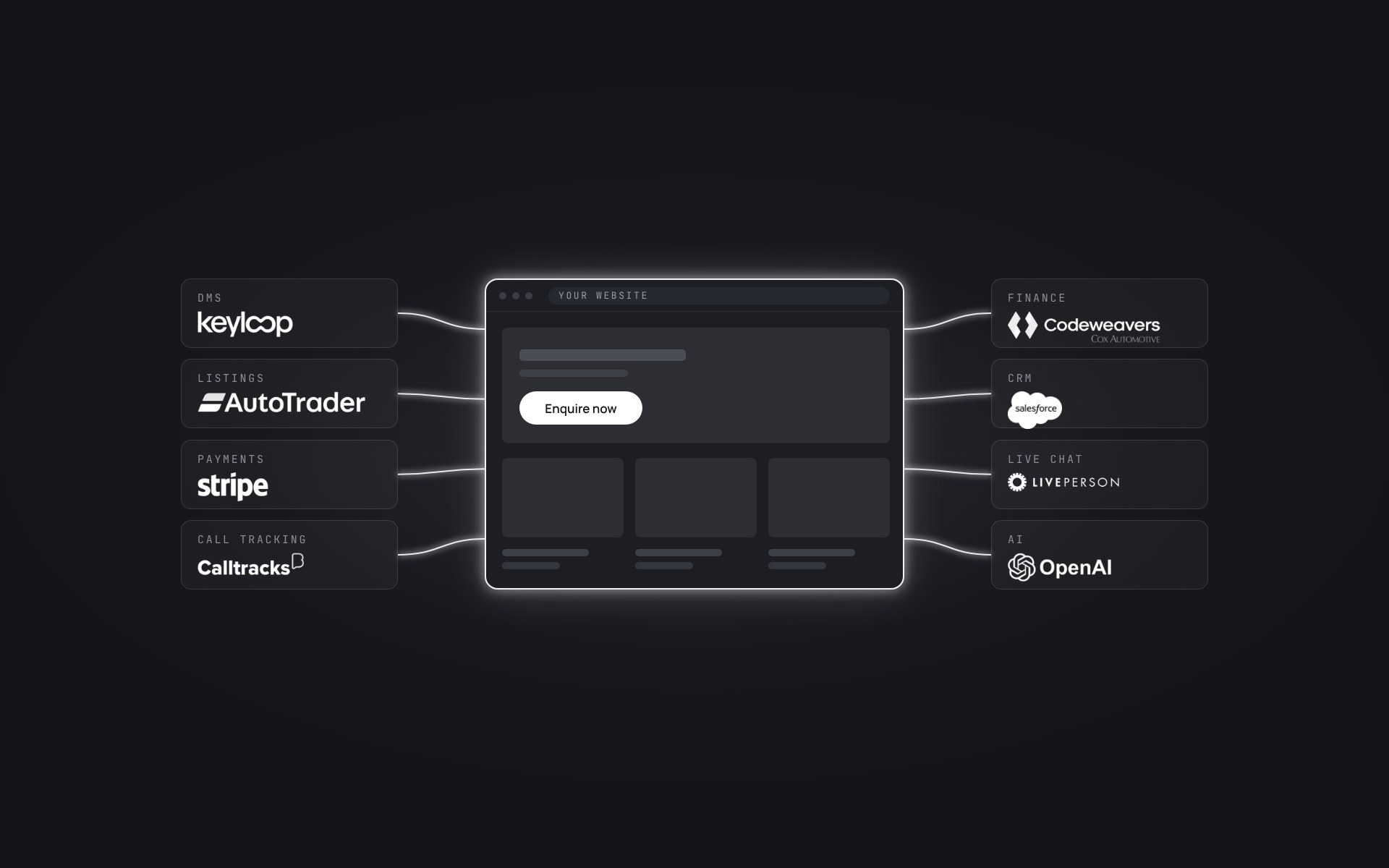
Most businesses that sell vehicles didn't choose their tech stack in one go. It grew. A DMS that's been in place for years. A finance provider the team knows inside out. A CRM that holds every customer conversation. Stock feeds, video tools, part exchange valuations, payments.
Each of those systems earned its place. The problem is usually the website sitting in front of them.
The website is where the stack shows its seams
When a website can't talk properly to the systems behind it, people fill the gaps by hand. Stock gets re-keyed or goes out of date. Finance quotes live on a separate page that doesn't match the vehicle. Enquiries land in an inbox instead of the CRM, and someone has to copy them across before anyone can follow up.
Customers feel it too. They see a car online that sold yesterday. They get a finance figure that changes when they call. They fill in a form and wait.
None of that is a DMS problem or a CRM problem. It's a website problem.
Why "start again" is the wrong answer
When a website isn't working, the pitch is often a whole new ecosystem: switch your stock management, move your leads into a new tool, adopt a new way of doing finance. That's months of disruption, retraining and risk, all to fix the bit the customer actually sees.
We think that's backwards. Your team already knows how to run the business on the systems you have. The job of the website is to make those systems work harder, not to replace them.
How Autonomy approaches it
Autonomy is built to sit in front of the systems you already use and connect them into one customer journey. Take one dealer group we work with. Stock comes from a Keyloop DMS, listings go to AutoTrader, finance quotes come from CodeWeavers, payments run through Stripe, leads go into Salesforce, calls are tracked with Calltracks, live chat runs on LivePerson and AI comes from OpenAI. One system for each job, all working through one website.
In practice that means:
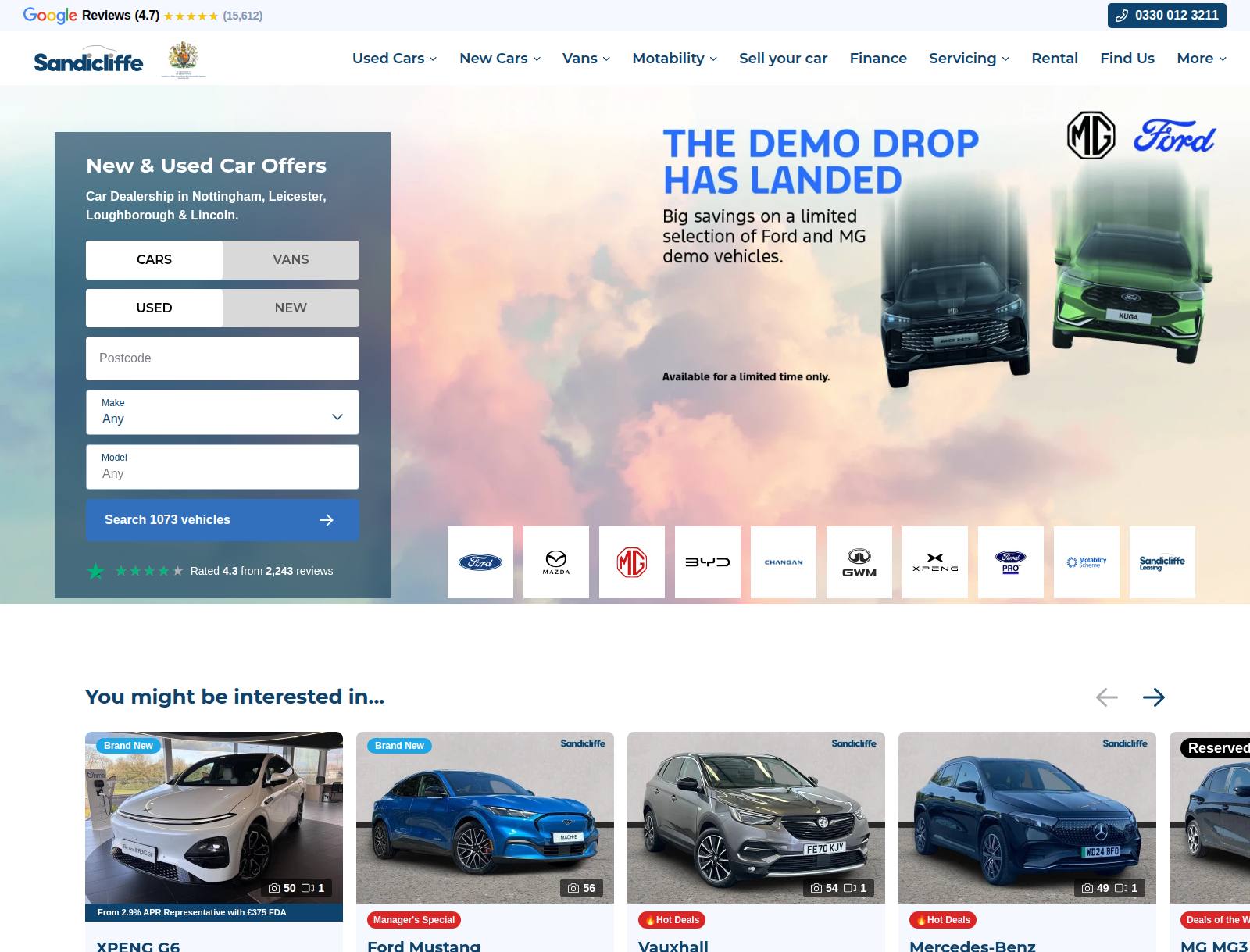
- Stock that's right. Vehicles flow from your existing feed onto the site, so what customers see matches what's on the forecourt.
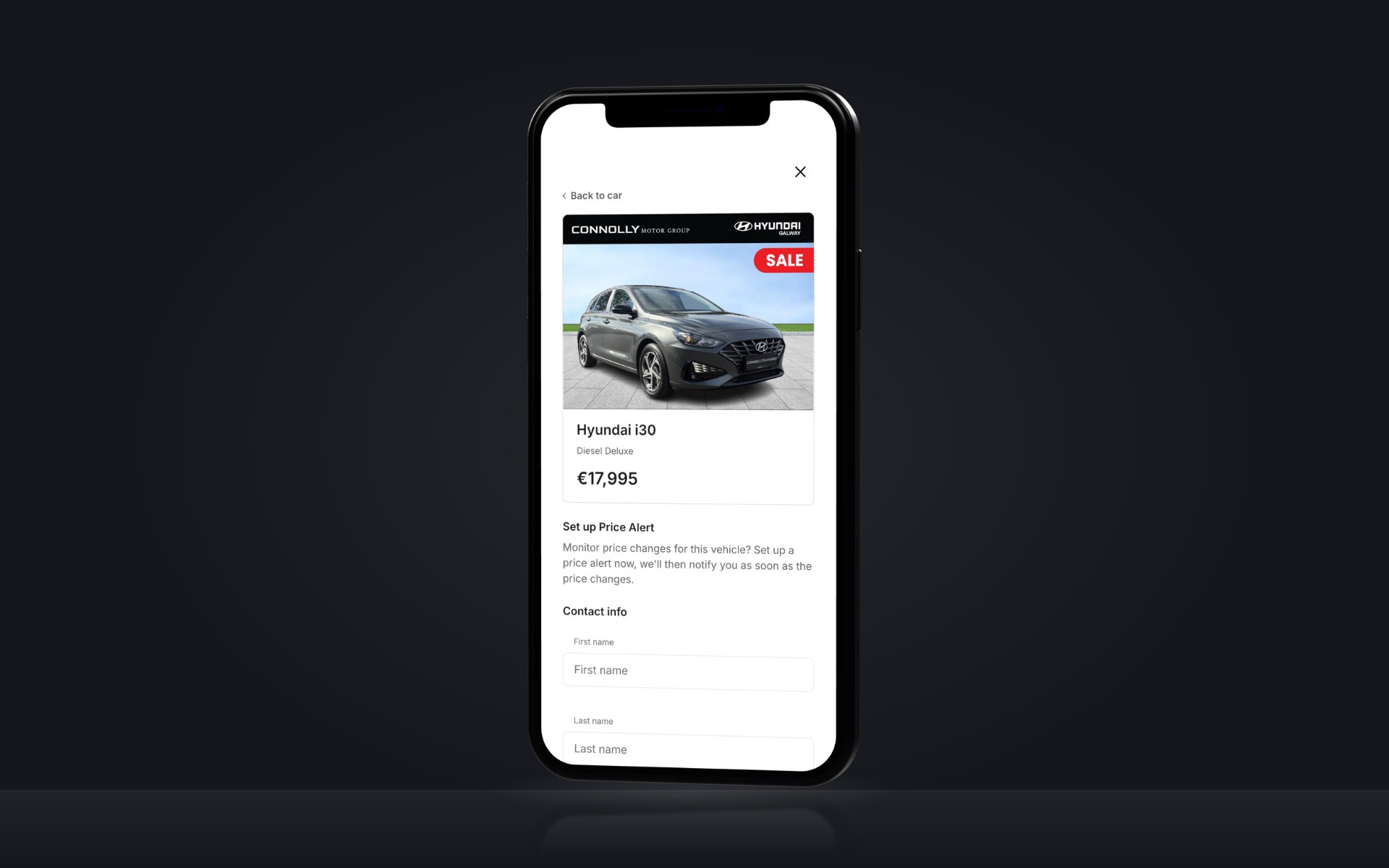
- Finance where the decision happens. Quotes sit on the vehicle page, using the provider you already work with.
- Leads that go straight to work. Enquiries route into your CRM or lead tool, to the right site or team, without anyone re-typing them.
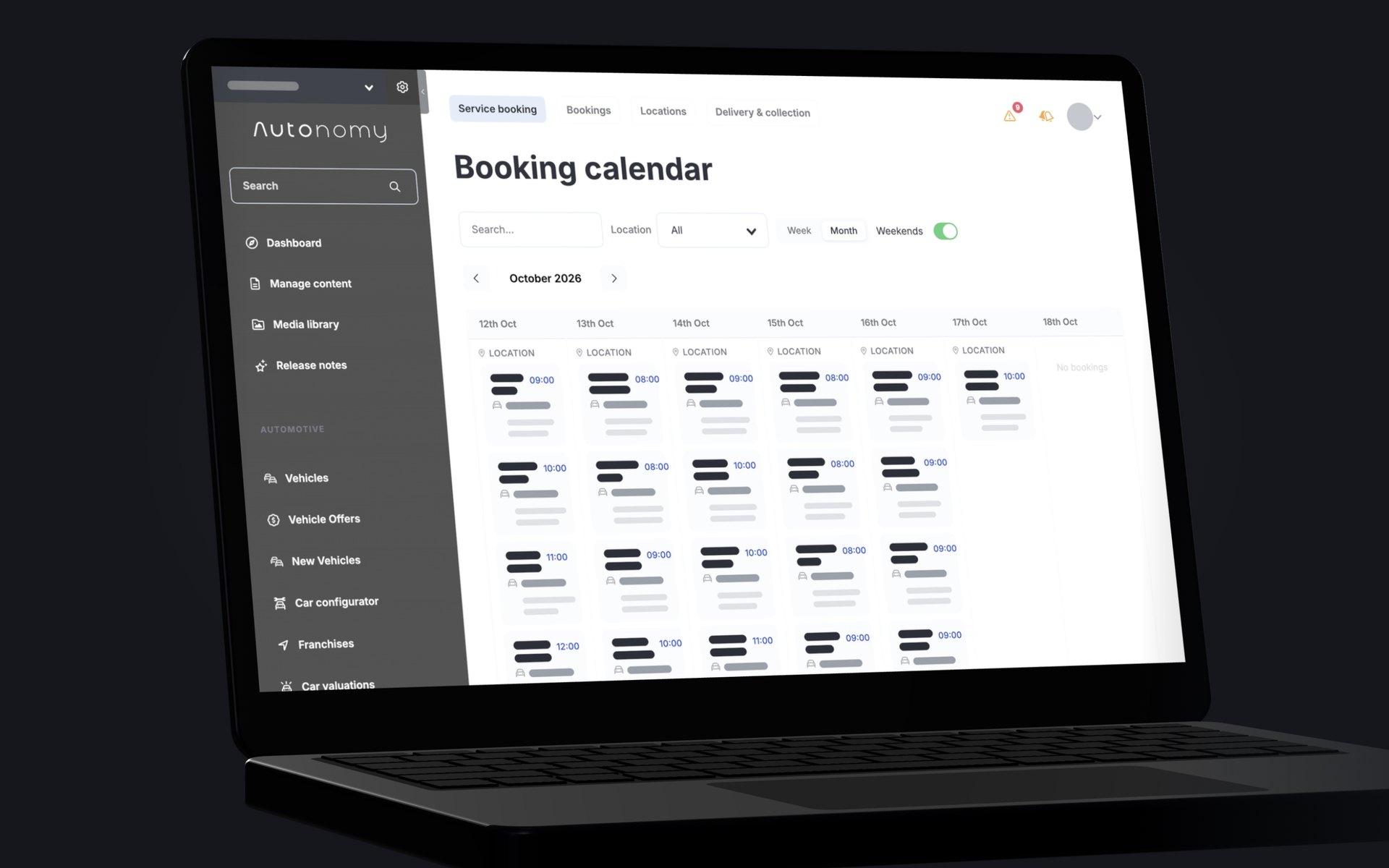
- One place to manage the website. Your team updates content, offers and pages without waiting on a developer.
The systems stay the same. The way they reach the customer changes.
And when the stack does change
Sometimes a business changes its systems for reasons that have nothing to do with the website. When that happens, the website should follow the decision, not make it harder.
We're building for a multi-franchise group right now that is moving to a new cloud DMS and CRM at the same time as its new website. So the website is being built around it: stock flows from the DMS to the website and on to AutoTrader, and every website lead goes straight into the DMS. Service booking was going to be built into the site, until it became clear the DMS has its own scheduler. So the website hands customers over to it instead of duplicating it.
The group sells cars, vans and agricultural machinery, so machinery is now a vehicle type in Autonomy too. Whether you sell cars, motorhomes or tractors, the principle is the same: your website works around your business, not the other way round.
Where to start
If you're weighing up a new website, start with a simple question: which systems would you never give up? Write them down. That list is your brief.
Then look for a website that works with every one of them.
You can see every system Autonomy connects with on our integrations page. If you'd like to see Autonomy running with your stack, book a demo.