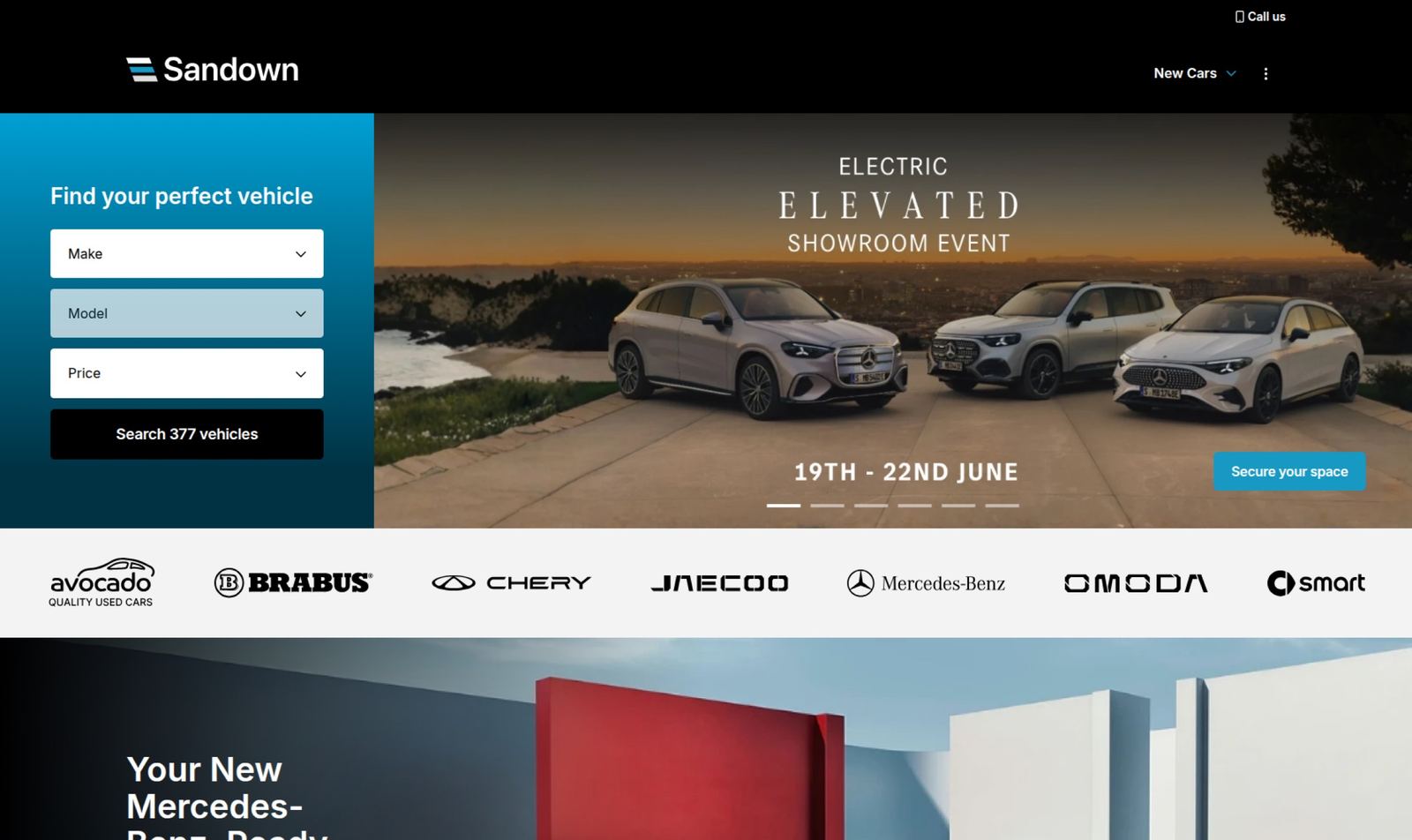
Search is one of the most important parts of any automotive website, but it is often treated as a basic function rather than a key driver of performance.
In reality, search has a major impact on how customers experience a dealer website. It affects how quickly they find relevant stock, how easily they refine their options, and how confidently they move through the browsing journey. When search is slow, limited or difficult to use, friction builds quickly. Customers lose momentum, journeys become frustrating, and valuable opportunities are lost.
That is why a smarter search experience matters.
With our new vehicle search engine, the focus has been on making stock discovery faster, more intuitive and more commercially effective. Better free-text matching, filter-result counts and improved load times all help users get to the right vehicles more quickly, while giving dealers a stronger platform for usability and conversion.
Why search matters
Automotive customers do not always arrive on a website knowing exactly what they want.
Some search by make or model. Others begin with a broader requirement: automatic, SUV, electric, low mileage, or under a certain budget. Many are still comparing and refining as they browse. That means search needs to do more than process basic filters. It needs to support how people actually shop.
A strong search experience helps customers narrow down options with confidence. It reduces the effort needed to move from a broad search to a shortlist and helps surface relevant stock more quickly. When search works well, the journey feels simple. When it does not, even strong stock can be harder to find.
Better free-text matching
One of the biggest improvements in our new search engine is better free-text matching.
Customers do not always search in neat, structured ways. They may type a model name, a body style, a fuel type, or a practical need. They may use shorthand or partial terms rather than exact model names. Smarter free-text matching helps interpret those searches more effectively, making results feel more helpful and relevant from the start.
That matters because it creates a more natural experience. Instead of forcing the customer to search in a very specific way, the platform does more of the work. The journey feels more intuitive and less rigid.
From a commercial point of view, that means more customers reaching relevant stock faster, and less risk of them dropping out because the experience feels clunky or unhelpful.
Filter-result counts that guide the journey
The addition of result counts within filters is another important improvement we’ve introduced.
This may seem like a small feature, but it has a real impact on confidence. When users can see how many vehicles sit behind a filter, they can refine their search more decisively. If they are choosing between petrol and hybrid, or between two body styles, they can make better decisions based on what is actually available.
It also helps reduce dead ends. Rather than clicking through multiple filter combinations only to find no results, customers are guided more clearly through the available stock. The journey becomes less trial and error, and more informed.
Why speed still matters
Speed remains one of the foundations of an effective search experience.
Even the best functionality loses impact if results are slow to load. Fast response times help the journey feel fluid, especially when customers are adjusting filters, comparing vehicles, or moving between listing pages. On mobile in particular, slow loading can quickly create frustration.
Improved load times do more than enhance usability. They help customers browse more pages, explore more stock and stay in the journey for longer. In practice, that creates a stronger foundation for conversion because the path from interest to action feels smoother.
More than a UX improvement
This is not just a feature upgrade for the sake of it. It is a practical improvement to one of the most commercially important journeys on a dealer website.
A customer searching for an electric SUV within budget should be able to refine quickly, understand what is available, and move through results without unnecessary friction. A user comparing hatchbacks with low mileage should be able to search confidently, not second-guess whether they are missing relevant stock.
At Autonomy, we see search as part of the wider digital experience, not a standalone tool. A modern automotive platform needs to help users find stock faster, browse with confidence and move naturally towards conversion. Smarter free-text matching, result-aware filters and faster loading all contribute to that goal.
Because on a dealer website, helping users find the right vehicle quickly is not just good usability.
It is good business.